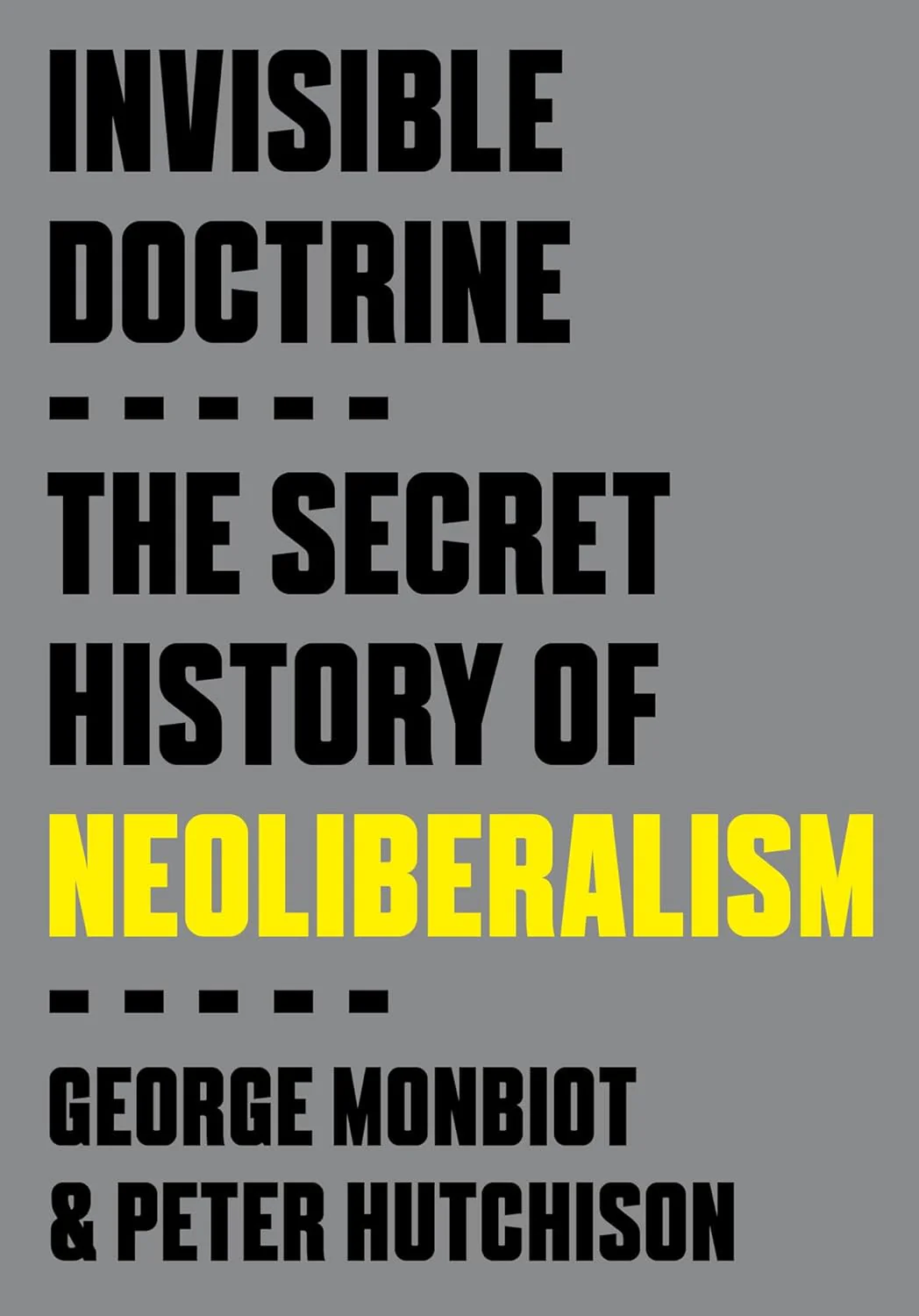
Invisible Doctrine by George Monbiot and Peter Hutchison
Category: Business & Money
Rating: 4.6/5
Pages: 224
About Book:
Neoliberalism is the dominant ideology of our time. It shapes us in countless ways, yet most of us struggle to articulate what it is. Worse, we have been persuaded to accept this extreme creed as a kind of natural law. In Invisible Doctrine, journalist George Monbiot and filmmaker Peter Hutchison shatter this myth. They show how a fringe philosophy in the 1930s—championing competition as the defining feature of humankind—was systematically hijacked by a group of wealthy elites, determined to guard their fortunes and power. Think tanks, corporations, the media, university departments and politicians were all deployed to promote the idea that people are consumers, rather than citizens.
One of the most pernicious effects has been to make our various crises—from climate disasters to economic crashes, from the degradation of public services to rampant child poverty—seem unrelated. In fact, they have all been exacerbated by the “invisible doctrine,” which subordinates democracy to the power of money. Monbiot and Hutchison connect the dots—and trace a direct line from neoliberalism to fascism, which preys on people’s hopelessness and desperation.
Speaking out against the fairy tale of capitalism and populist conspiracy theories, Monbiot and Hutchison lay the groundwork for a new politics, one based on truly participatory democracy and “private sufficiency, public luxury”: an inspiring vision that could help bring the neoliberal era to an end.
Original: $2.69
-70%$2.69
$0.81Product Information
Product Information
Shipping & Returns
Shipping & Returns
Description
Category: Business & Money
Rating: 4.6/5
Pages: 224
About Book:
Neoliberalism is the dominant ideology of our time. It shapes us in countless ways, yet most of us struggle to articulate what it is. Worse, we have been persuaded to accept this extreme creed as a kind of natural law. In Invisible Doctrine, journalist George Monbiot and filmmaker Peter Hutchison shatter this myth. They show how a fringe philosophy in the 1930s—championing competition as the defining feature of humankind—was systematically hijacked by a group of wealthy elites, determined to guard their fortunes and power. Think tanks, corporations, the media, university departments and politicians were all deployed to promote the idea that people are consumers, rather than citizens.
One of the most pernicious effects has been to make our various crises—from climate disasters to economic crashes, from the degradation of public services to rampant child poverty—seem unrelated. In fact, they have all been exacerbated by the “invisible doctrine,” which subordinates democracy to the power of money. Monbiot and Hutchison connect the dots—and trace a direct line from neoliberalism to fascism, which preys on people’s hopelessness and desperation.
Speaking out against the fairy tale of capitalism and populist conspiracy theories, Monbiot and Hutchison lay the groundwork for a new politics, one based on truly participatory democracy and “private sufficiency, public luxury”: an inspiring vision that could help bring the neoliberal era to an end.